What is Demurrage? Delay Fees in Transportation
Time management plays a critical role in international transportation operations. Delays occurring at ports or customs-controlled areas may result in additional costs. This is where demurrage comes into play, representing one of the logistics terms most frequently encountered by companies engaged in import and export activities.
So, what is demurrage, why does it occur, and is it really possible to avoid these charges?
What Is Demurrage?
Demurrage is a delay charge that applies when the free storage period granted by the carrier is exceeded within the port area or terminal. Also referred to as "demurrage" in maritime transportation, this charge arises when a container is not collected within the allotted time.
Simply put, demurrage is an additional fee paid to the carrier when a container remains at the port longer than necessary. Particularly in foreign trade operations, disruptions in processes can quickly lead to increasing demurrage costs.
Why Is Demurrage Applied?
The primary purpose of demurrage is to ensure the efficient use of containers and port facilities. When containers remain at the port for extended periods, port operations are negatively affected, and equipment utilization becomes less efficient.
For this reason, carriers impose delay charges when the designated free time is exceeded. The objective is to reduce port congestion and accelerate container circulation. In addition, demurrage helps compensate carriers for operational losses incurred during the delay period.
- Compensation for Loss: Provides fixed compensation for the carrier's loss of alternative earning opportunities resulting from the container being held for an extended period.
- Port Efficiency: Functions as a deterrent cost element aimed at reducing congestion in port areas and maintaining the continuity of cargo flow.
- Equipment Turnover: Optimizes equipment circulation by preventing containers from remaining idle within the logistics chain.
What Is a Demurrage Charge and How Is It Calculated?
A demurrage charge is a delay fee calculated on a daily basis once the free time defined by the carrier has expired. This charge continues to accrue until the container leaves the port.
Key Parameters Used in CalculationDemurrage calculations are not arbitrary and are generally based on the following four key variables:
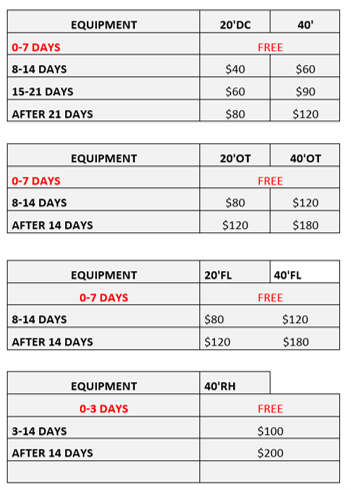
- 1. Free Time: The number of days a container may remain at the port or terminal after discharge without incurring charges.
- 2. Daily Tariff: The daily rate applied once the free time has been exhausted. It is typically determined in USD or EUR.
- 3. Progressive Rate Structure (Slab System): Many carriers increase the daily charge as the number of storage days increases. For example, USD 30 for the first 7 days and USD 60 for the following 7 days.
- 4. Equipment Type and Size: Unit rates may vary depending on whether the equipment is a 20’, 40’, High Cube, or special container type.
Demurrage Tariff Effective as of 01.01.2026
Main Causes of Demurrage
There are many different situations that may lead to demurrage charges. These delays are generally caused by documentation issues, customs procedures, or operational disruptions.
Documentation Issues
Failure to provide the Bill of Lading on time or errors in documentation may delay the release of cargo from the port. Among the most common issues are missing commercial invoices, packing lists, or certificates of origin, which can significantly extend the process.
Customs Procedures
Customs inspections, red line procedures, or additional analysis requirements may cause containers to remain at the port longer than expected. Additional permit requirements for certain product groups may also create delays.
Financial Problems
Delayed freight payments or commercial disputes regarding cargo value remain among the most common causes of demurrage.
Operational Congestion
Operational issues such as port congestion, equipment shortages, or the unavailability of transportation vehicles may also delay container pickup.
How Can Demurrage Charges Be Avoided?
Proper planning of logistics processes and effective coordination among stakeholders are essential for avoiding demurrage costs. In particular, completing documentation and customs procedures in advance provides a significant advantage.
1. Strategic Planning Before Signing the Contract
- Free Time: Before signing the transportation contract, additional free time should be negotiated, especially for ports where customs procedures are complex.
- Selecting the Right Bill of Lading Type: Requesting a "Telex Release" or "Express Release" from the shipper can accelerate documentation procedures and help avoid delays associated with courier delivery of original Bills of Lading.
2. Documentation and Data Management
- Pre-Alert and Early Document Review: Reviewing draft customs documents before the vessel arrives and correcting any errors at the port of loading is of great importance.
- Integration with Electronic Delivery Order Systems: As part of digitalization efforts in Türkiye, data integration with agents should be established to enable Delivery Order approvals through digital platforms.
3. Operational Coordination
- Customs Broker and Transport Provider Synchronization: Registering the customs declaration simultaneously with vessel discharge and ensuring the availability of trucks for container pickup are critical factors.
- Container Type and Port Selection: Operational congestion or equipment shortages at certain ports may increase the risk of demurrage. Therefore, alternative ports or off-dock temporary storage facilities should be considered when appropriate.
Why Is Demurrage Important?
Demurrage charges can create significant costs that should not be overlooked by companies involved in foreign trade. Especially in busy port environments, even a few days of delay may result in substantial additional expenses.
For this reason, it is essential for companies to carefully plan their logistics operations, manage documentation accurately, and closely monitor port activities. A well-managed process helps eliminate both unnecessary delays and avoidable demurrage costs.
Latest Turkon releases