What Is a Delivery Order? Its Role and Importance in Logistics
Document management is often overlooked in foreign trade and logistics operations, yet it plays a vital role in ensuring that deliveries proceed smoothly. One of the most frequently encountered documents in this process is undoubtedly the Delivery Order. Commonly used in import operations, this document ensures that cargo is delivered to the correct party, protecting both the carrier and the consignee. But what is a Delivery Order, what is its purpose, and why does it hold such a critical place in logistics processes?
What Is a Delivery Order?
A Delivery Order is an official document issued by the carrier or its agent during import processes, confirming that the cargo may be delivered to the consignee. This document ensures that goods stored at a port, bonded warehouse, or storage facility are released only to the authorized party.
In simple terms, the primary purpose of a Delivery Order is to prevent cargo from being delivered to unauthorized individuals. By controlling delivery authorization through the Delivery Order, the carrier ensures that cargo is released only to the rightful recipient. This mechanism helps prevent both legal disputes and potential operational confusion.
With the increasing level of digitalization, the electronic Delivery Order (e-DO) system is becoming more widely used within the logistics industry. Prepared electronically, e-Delivery Orders allow transactions to be completed more securely and efficiently while simplifying documentation processes and reducing operational costs.
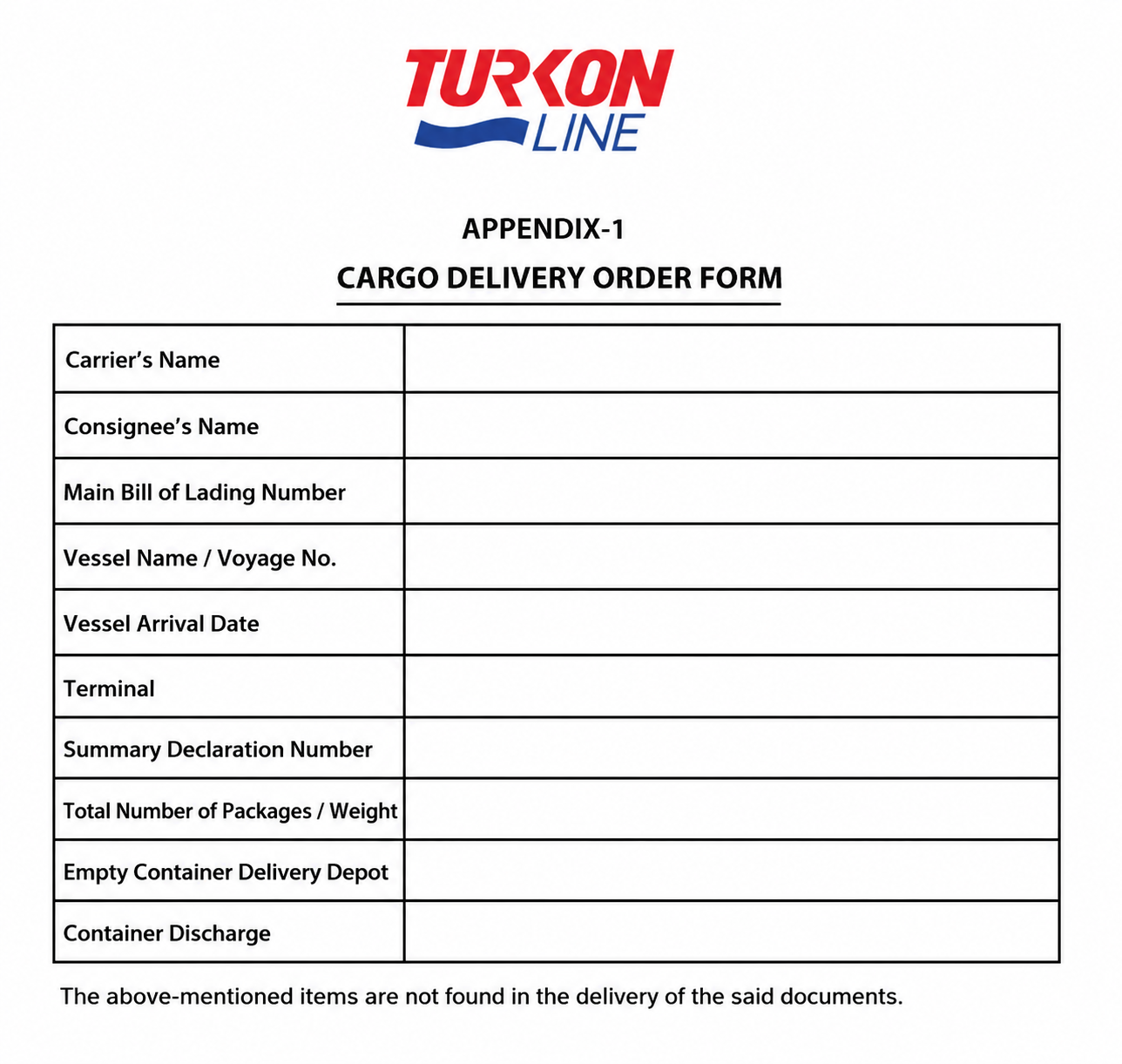
Sample Order Form (Cargo Delivery Form) Image:
The Role and Importance of a Delivery Order in Logistics
The answer to the question “What does a Delivery Order mean?” is actually hidden within its critical function in logistics. A Delivery Order is one of the key documents that supports the smooth completion of logistics and foreign trade processes. Particularly in import operations, presenting a Delivery Order may be mandatory before cargo can be released. This document helps secure the carrier’s receivables while ensuring that the cargo release process proceeds in a controlled manner.
A properly issued Delivery Order accelerates customs procedures and helps prevent potential delays during the delivery process. For this reason, it is considered an indispensable part of modern logistics operations.
Functions and Areas of Use of a Delivery Order
A Delivery Order is a functional document that supports secure cargo release while providing both carriers and consignees with greater control over the process.
1. Confirmation of DeliveryThe primary function of a Delivery Order is to formally authorize the release of cargo from the carrier to the consignee. Issued after the Bill of Lading has been reviewed, it confirms that there are no obstacles preventing the cargo from being delivered.
2. Compliance with Customs ProceduresA Delivery Order must be presented in order to collect cargo waiting in a customs-controlled area. Without this document, it may not be possible to remove the goods from the port or bonded warehouse.
3. Payment ControlCarriers issue a Delivery Order after freight charges and other applicable fees have been paid. This approach helps secure payment processes and maintain financial balance between the parties involved.
Areas of Use- Ocean Freight: Used during the release of containers from the port.
- Air Freight: Plays a critical role in the release of cargo from airport warehouses.
- Bonded Warehouse Operations: Used in the process of removing goods from customs-controlled storage facilities.
- E-Commerce and Imports: Serves an important role in the delivery of products sourced from overseas.
Differences Between a Delivery Order and a Bill of Lading
Delivery Orders and Bills of Lading are often confused with one another. However, they are separate documents that complement each other while serving different purposes.
A Bill of Lading is an official document that records the transportation process and ownership of the goods. A Delivery Order, on the other hand, is an instruction authorizing the release of cargo.
Key Differences- • A Bill of Lading is issued at the beginning of the transportation process, whereas a Delivery Order is issued at the delivery stage.
- • A Bill of Lading may be transferred through endorsement, while a Delivery Order is issued specifically for the designated consignee.
- • A Bill of Lading represents ownership rights over the goods, whereas a Delivery Order only grants authority for cargo release.
How to Obtain a Delivery Order?
The process of obtaining a Delivery Order begins once the cargo arrives at the port. The steps generally follow this sequence:
- • The carrier sends an arrival notice to the consignee.
- • The consignee submits the Bill of Lading to the authorized agent.
- • Freight charges and related fees are paid.
- • Necessary checks are completed and the Delivery Order is issued.
- • In the e-Delivery Order system, all these steps are completed digitally.
What Is a Delivery Order Fee?
The Delivery Order Fee, also referred to as a Service Fee, is a charge collected by the carrier’s agent for operational procedures, document management, and system integration services performed during the cargo release process. This fee is considered part of the local charges at the destination and forms an integral component of the transportation contract and Bill of Lading process.
Legal Framework of a Delivery Order
In Türkiye, a Delivery Order is an official cargo release document issued in accordance with Customs Law No. 4458 and related regulations. It plays a decisive role in the completion of customs procedures and the release of goods to the consignee.
Furthermore, this document serves as legal evidence that the carrier has fulfilled its delivery obligations properly and completely.
Latest Turkon releases